Document belonging to the Greek Mythology Link, a website created by Carlos Parada, author of Genealogical Guide to Greek Mythology


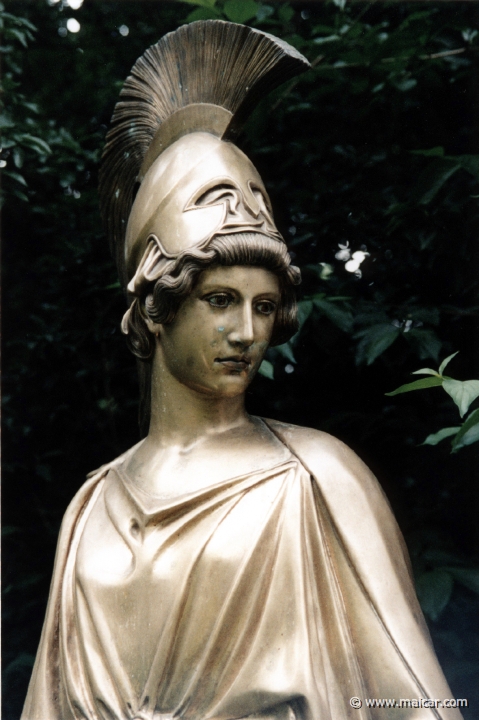
Athena

Atenea


Athena | Atenea


"Voice of Athena, dearest to me of the gods, how clearly, though you are unseen, do I hear your call and snatch its meaning in my mind." (Odysseus. Sophocles, Ajax 14).

"A day can press down all human things, and a day can raise them up. But the gods embrace men of sense and abhor the evil." (Athena to Odysseus. Sophocles, Ajax 130).

«¡Voz de Atenea, la más querida para mí de las divinidades! ¡Qué clara, aun siendo invisible, escucho tu voz y la capto con mi mente!» (Odiseo. Sófocles, Áyax 14).

«Un solo día abate y de nuevo levanta todas las cosas de los hombres. A los prudentes los dioses los aman, pero aborrecen a los malvados.» (Atenea a Odiseo. Sófocles, Áyax 130).


Features of Athena

Características de Atenea


Wisdom

Bright-eyed Athena, who has been called the mind of god, is the goddess of prudent intelligence, her share of wisdom having been given to her by Zeus. She is able to bestow command, skill and courage, and also victory in war for those who revere justice and listen to her persuasive tongue, or destruction for the unjust. For these reasons it has always been desirable to count upon her favour when war is at hand, for Athena, it is said, would never put up with defeat. And yet she checks the insolence of those whose spirit is violent and unjust.

Sabiduría

Atenea, de brillantes ojos, a quien se llama la mente dios, es la diosa de la inteligencia prudente. La porción de sabiduría que posee le fue concedida por Zeus. Tiene Atenea la facultad de otorgar mando, destreza, coraje y victoria en la guerra a todo aquel que venera la justicia y escucha su persuasiva voz, o bien de destruir a los injustos. Por eso se desea siempre contar con su favor, en particular cuando una guerra se aproxima. Pues Atenea no se resigna nunca a la derrota y está siempre dispuesta a enfrentar los espíritus arbitrarios y violentos.

Skill and Justice

Athena, after having brought out the olive-tree from a rock, introduced its cultivation, and also the making of clothing, carpentry and other arts, being the protectress of all crafts, a privilege she shares with Hephaestus. That is why she also is a goddess promoting prosperity for all those who, while making flourish the fruits of the earth, cherish justice and know how to live a sorrowless life. Such are Athena's blessings and that is why she, who for being wise is also just, instructs thus:

"If you always greatly honor with kindness the kindly ones, you will surely be preeminent, keeping your land and city in the straight path of justice." (Athena. Aeschylus, Eumenides 992).

Destreza y justicia

Atenea hizo brotar un olivo de una roca e introdujo su cultivo. Enseñó carpintería y la confección de ropas, y es por ello la patrona de todas las artes y artesanías, privilegio que comparte con Hefesto. Procura así esta diosa la prosperidad a todo aquel que hace florecer los frutos de la tierra y que, respetando la justicia, ha aprendido a vivir una vida sin pesares. Tales son las bendiciones de Atenea, que por ser sabia es también justa. Dice así:

«Honrando magníficamente con bondad a los buenos, destacaréis por conducir siempre vuestra tierra y ciudad por el sendero recto de la justicia.» (Atenea. Esquilo, Euménides 992).

Manly goddess

Athena presided the first court which tried a case of homicide, the murder of Clytaemnestra by her son Orestes 2, establishing a permanent tribunal in Athens. This goddess, who generally prefers to see most things from a manly point of view, acquitted Orestes 2, for she deemed Clytaemnestra's crime, killing her husband, to be greater than that of Orestes 2, killing her mother Clytaemnestra in order to avenge his father Agamemnon.

"There was no mother who gave me birth; and in all things, except for marriage, wholeheartedly I am for the male and entirely on the father's side. Therefore, I will not award greater honor to the death of a woman who killed her husband, the master of the house." (Athena to the court. Aeschylus, Eumenides 734).

Diosa varonil

Atenea presidió el primer tribunal que trató un caso de homicidio—el asesinato de Clitemnestra por su hijo Orestes 2—estableciendo así el primer tribunal permanente de Atenas. Esta diosa, que por lo general prefiere ver las cosas desde un punto de vista masculino, absolvió a Orestes 2, juzgando que Clitemnestra, al asesinar a su marido, había cometido un crimen mayor que el de Orestes 2 al asesinar a su madre para vengar a su padre, Agamenón.

«Añadiré mi voto a los favorables a Orestes, que a mí no me parió madre alguna. Lo masculino, excepto el casamiento, siempre lo apoyo de todo corazón, pues soy enteramente de mi padre. De esta manera no honraré más a una mujer que mató a su esposo, señor de la casa.» (Atenea al tribunal. Esquilo, Euménides 734).


Some interventions of Athena

Algunas intervenciones de Atenea


Birth

When Zeus was full-grown, he consorted first with the Oceanid Metis 1, who tried to avoid him, turning into many shapes. Some say that it was Metis 1 who, in order to help Zeus against his father Cronos, gave to the latter a drug that forced him to disgorge his own children, whom he had swallowed; but others say that it was Gaia who administered this drug.

However, there was a prophecy, uttered by Uranus and Gaia, which said that Metis 1, who was wisest among the gods (for she was possessed by wisdom or was wisdom itself), would give birth to a son who should become the lord of heaven. This is the reason why Zeus, fearing that he would lose the power that he only recently had acquired as ruler of the universe, swallowed her while she was pregnant.

And when the time came for the birth to take place, Prometheus 1 (or else Hephaestus) smote the head of Zeus with an axe, and Athena, fully armed, came out of the top of his head at the river Triton in Libya. This is how Athena was born, but the Libyans say otherwise (see Parentage below).

Nacimiento

Al llegar Zeus a su madurez, unióse primero con la oceánide Metis 1, que huía de él asumiendo formas distintas. Se cuenta que Metis 1 había ayudado a Zeus contra su padre, Cronos, administrándole a éste una droga que lo hizo vomitar los hijos que se había tragado. Otros afirman que fue Gea la que le hizo tomar el vomitivo.

Urano y Gea habían vaticinado que Metis 1—la más sabia de las deidades ya fuera por estar poseída por la sabiduría o por ser la sabiduría misma—daría a luz un hijo que se convertiría en el soberano del Cielo. Temiendo Zeus perder su poder (que apenas acababa de obtener), se tragó a Metis 1 cuando estaba encinta.

Cuando el alumbramiento debía producirse, Prometeo 1 (o tal vez Hefesto) abrió la cabeza de Zeus con un hacha y Atenea salió de ella, con todas sus armas, en las cercanías del río Tritonis en Libia. Así nació la diosa, pero los libios tienen otra opinión (véase Linaje más abajo).

Childhood

It has been said that Athena was brought up by the Boeotian Alalcomeneus, but according to the Arcadians, Athena, as soon as she was born, was handed over to Pallas 2 by Zeus, and reared by him till she grew up.

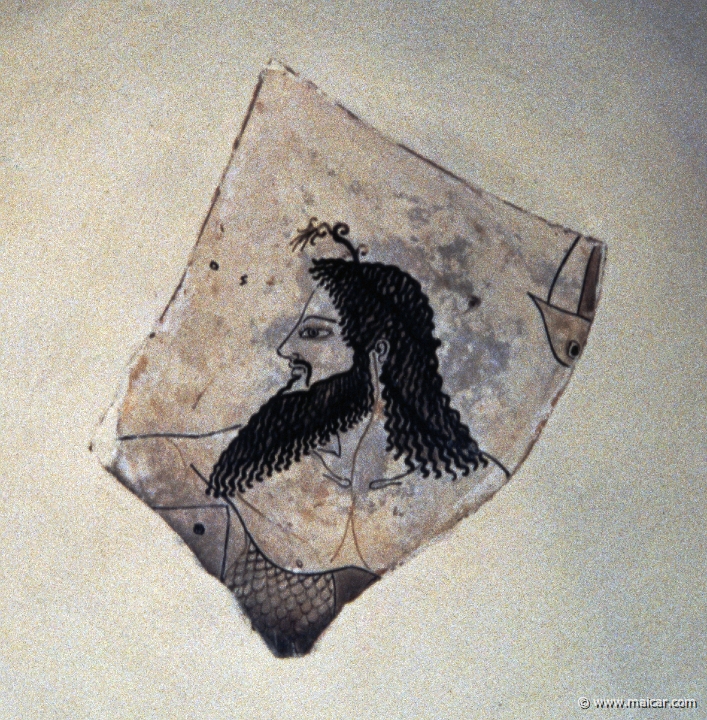
Others affirm that when Athena was born she was brought up by Triton (the son of Poseidon and Amphitrite), whose body, as far as the belly, was like that of the gods, but had a tail of a sea-monster.

During her childhood, Athena, while playing with another girl called Pallas 3, killed her accidentally during one of their games, and being grieved for her death, Athena made a wooden image in her likeness, which was called the Palladium.


Infancia

Algunos afirmas que a Atenea la crió el beocio Alalcomeneo pero, de acuerdo con los arcadios, Zeus le entregó Atenea a Palas 2 (apenas nacida), y éste cuidó de ella hasta que creció.

Otros dicen que a Atenea la crió Tritón (hijo de Poseidón y Anfítrite), el que, hasta el vientre, es como los dioses, pero que tiene la cola de un monstruo marino.

Siendo niña, jugaba Atenea con una amiguita llamada Palas 3, a quien mató accidentalmente en uno de sus juegos. Dolorida por su muerte, fabricó Atenea una estatua de madera que representaba a su amiga, que se llamó «Paladio».


Triton: said to have brought up Athena | Tritón, de quien se dice crió a Atenea


Athens adjudged to Athena

It was in the time of King Cecrops 1, the first king of Attica, that Athens was adjudged to Athena, when she produced the olive-tree. Since then Athena has been the patroness of Athens, and she has been called the mother, the mistress, and the guardian of the city (more details about the circumstances around Athens being adjudged may be read at Poseidon).

La ciudad de Atenas se adjudica a Atenea

En la época de Cécrope 1, primer rey de Ática, se adjudicó la ciudad de Atenas a Atenea, al hacer ella brotar un olivo. Desde entonces, ha sido Atenea la patrona de Atenas, llamándosela madre, dueña y guardiana de la ciudad (más sobre el tema de la adjudicación, puede leerse en Poseidón).

Virgin goddess and birth of Erichthonius 2

Some have said that Hephaestus, who is akin to Athena because he also protects the crafts, attempted to rape this virgin goddess, and that when she was escaping him he dropped his seed on Athena's leg whereupon she, in disgust, wiped off the seed with wool and threw it on the ground. And from the seed which fell on the ground as the goddess fled, Erichthonius 2, whose body's lower part was snake formed, was produced.

Creusa 1 (daughter of Erechtheus, son of Pandion 2, son of Erichthonius 2) thought something similar, for when her son Ion 1 asked her about Erichthonius 2 she answered:

Ion 1: And did Athena take him up from the earth?
Creusa 1: Into her virgin hands; she was not his mother. (Euripides, Ion 269).

Still others have said that Erichthonius 2, who later became king of Athens, was a son of the soil (see AUTOCHTHONOUS).

Diosa virgen. Nacimiento de Erictonio 2

Hay semejanzas entre Hefesto y Atena porque también protege aquel las artes y oficios. Pero asimismo se dice que el dios intentó violarla, y que, mientras ella escapaba, derramó él su semen sobre la pierna de ella. Disgustada, Atenea limpió el esperma con un trozo de lana que arrojó al suelo. Y de esa simiente que impregnó el suelo mientras la diosa huía, nació Erictonio 2, cuya parte inferior del cuerpo era como de serpiente.

Algo parecido creía Creúsa 1 (hija de Erecteo, hijo de Pandión 2, hijo de Erictonio 2), puesto que al preguntar su hijo Ión 1 acerca de Erictonio 2, contestó ella:

Ión: ¿Es cierto que Atenea lo sacó de la tierra?
Creúsa: Sí, con manos virginales, sin parirlo. (Eurípides, Ión 269).

Otros han dicho que Erictonio 2, que luego fue rey de Atenas, era un hijo del suelo (véase AUTÓCTONOS).

Erichthonius 2 grows up hidden

In any case, Athena is said to have brought Erichthonius 2 up unknown to the other gods, hiding the child in a chest, which she gave to the daughters of King Cecrops 1 of Athens to guard. But the girls opened the chest, and a crow gave the secret away, and the sisters, driven mad by the goddess, threw themselves into the sea (more details at Envy).

Erictonio 2 se cría a escondidas

Atenea crió a Erictonio 2 a escondidas de los otros dioses. Ocultaba al niño en un cofre, que dejó al cuidado de las hijas del rey Cécrope 1 de Atenas. Pero las curiosas chicas abrieron el cofre, y un cuervo reveló el secreto. Se enfadó la diosa, haciendo que las hermanas enloquecieran y se tiraran al mar (más detalles en «Envidia»).

Promised wages should be respected

Athena caused Alcinoe 2 to fall in love with another man and leave husband and children; this she did to avenge a woman named Nicandra who had come to spin for Alcinoe 2, and after having worked for a year was turned out of the house without receiving the full wages Alcinoe 2 had promised to give her.

Las promesas salariales deben respetarse

Castigó Atenea a Alcínoe 2, haciendo que se enamorara de otro hombre y que por él abandonara marido e hijos, para vengar a Nicandra, una hilandera, que luego de trabajar un año, fue despedida sin que Alcínoe 2 le pagara el salario que le había prometido.

Gods and mortals cannot be compared

Arachne, who had gained Fame in the Lydian towns for her skill in the art of spinning and weaving wool, thought she could compete with Athena in that art and, being defeated, was turned into a spider by Athena (see Arachne).

Dioses y mortales no se comparan

Aracne, famosa en todas las ciudades de Lidia por su habilidad como hilandera y tejedora, supuso que podía competir con su arte contra Atenea, pero la diosa la derrotó y convirtió en araña (véase Aracne).

Helping to heal

Asclepius, the great healer, received from Athena the blood that flowed from the veins of Medusa 1, and while he used the blood that flowed from the veins on the left side for the bane of mankind, he used the blood that flowed from the right side for salvation, and by that means he was able to raise the dead.

Ayuda a curar

El gran sanador Asclepio recibió de Atenea la sangre que corría por las venas de Medusa 1. Utilizaba él la sangre que fluía por las venas del lado izquierdo para arruinar a la humanidad, y la que fluía por el derecho para salvarla y resuscitar a los muertos.

The Judgement of Paris

It has been said that the shepherd Paris, who afterwards turned into a prince and through the abduction of a woman caused the Trojan War and the ruin of his country, once made a Judgement on Mount Ida, by which an award of beauty, consisting in the golden apple of Eris, was granted to Aphrodite. The goddesses who lost the contest were Athena and Hera, for Paris rejected their gifts and instead accepted Aphrodite's bribe, which was the hand of Helen.

However, it has also been suspected, that there never took place such a judgement, and that Helen and Paris just fell in love without divine intervention, except the normal one in these cases. For it has been thought that neither Hera nor Athena had any reason to come to Phrygia in order to contest a palm of beauty awarded by a shepherd, since Hera cannot hope of winning a better husband than Zeus, and Athena is known for disliking marriage.

El Juicio de Paris

El pastor Paris, que convertido en príncipe raptó una mujer y causó la Guerra de Troya, arruinando a su país, fue juez en una competencia de belleza cuyo premio consistía en la manzana de oro que una vez Eris arrojara en una fiesta. Las perdedoras fueron Atenea y Hera. Afrodita ganó el premio, sobornando a ese juez con la promesa de darle la mano de Helena.

Pero algunos sospechan que nunca tuvo lugar ese juicio; que no hubo intervención divina cuando Paris y Helena se enamoraron. Pues se preguntan qué razones podrían haber tenido Hera y Atenea para participar en una competencia de belleza en Frigia, con un pastor de juez, en circunstancias en que ni Hera podía obtener mejor marido que Zeus, ni Atenea deseaba casarse.

The will to punish Troy

It has often been remarked that Paris, through his judgement, earned the eternal enmity of both Hera and Athena, not only against himself, but also against his family and his whole country. And this has been proved by the way these goddesses sought to punish the Trojans during the war, and to utterly destroy the city and the house of King Priam 1 of Troy. This is how these goddesses converse with each other about Hector 1, when he was defeating the Achaeans in the battlefield:

Hera : See what Hector has done to the Achaeans already. And now there is no stopping him in his mad career.
Athena : Nothing could please me more than to see that mad career cut short and have him killed on his native soil by Achaean hands. (Homer, Iliad 8.350).

La voluntad de castigar a Troya

Se ha señalado que Paris, gracias a su manera de juzgar, obtuvo la enemistad eterna de Hera y Atenea, no sólo contra sí mismo, sino también contra su familia y su país. Y esto se prueba por la saña con que esas diosas quisieron castigar a los troyanos durante la guerra, impulsando la destrucción de la ciudad y la Casa del rey Príamo 1. Así conversaban las diosas, cuando Héctor 1 derrotaba a los aqueos en el campo de batalla:

Hera: Ya van los dánaos a sucumbir cumpliendo su funesto destino, por el empuje de un sólo hombre, Héctor Priámida, que se enfurece de manera insoportable y ya ha causado grandes estragos.
Atenea: Ojalá que ese hombre hubiera ya perdido la furia y la vida, muerto en su tierra patria a manos de los aqueos.
(Homero, Ilíada 8.350).

Athena wounded by unknown Arcadian

When the powerful Achaean fleet which sailed against Troy to demand the restoration of Helen and the property that Paris had stolen was still in Aulis (the harbour opposite the island of Euboea where the fleet gathered), Athena was involved in a dispute that injured her. For Teuthis from Arcadia, who had joined the army, had a quarrel with Agamemnon at Aulis, and because of it he returned home. But before leaving, Athena tried to persuade him to go to war and then he wounded her in the thigh.

Atenea herida por un arcadio desconocido

Cuando la poderosa flota aquea, que luego zarparía a Troya para exigir la devolución de Helena y los bienes robados por Paris, todavía se encontraba en Áulide (el puerto frente a la isla de Eubea donde la flota se había reunido), se vio Atenea envuelta en una disputa de la que salió herida. El arcadio Teutis, que se había enlistado en el ejército, tuvo una diferencia con Agamenón, y resolvió volverse a casa. Pero antes de que partiera, Atenea quiso convencerlo de que fuera a la guerra, y él respondió hiriéndola en un muslo.


Stays Achilles' anger

When the dispute started between King Agamemnon and Achilles concerning the latter's sweetheart Briseis, whom the king threatened to take away from him, Achilles was very close to draw his sword and kill Agamemnon, but then Athena came down from heaven and, appearing to him alone and seizing him by his hair, prevented him from attacking the king. And when he protested, she told him:

"I have come from heaven to stay your anger ... Three times as many glorious gifts shall be yours on account of the king's arrogance. But refrain, and obey me." (Athena to Achilles. Homer, Iliad 1.208).

Contiene la cólera de Aquiles

Al estallar la disputa entre Agamenón y Aquiles por Briseida, amenazando aquel con apropiarse la amada de éste, estuvo Aquiles próximo a desenvainar su espada y matar a Agamenón. Pero Atenea bajó del Cielo, y apareciéndosele sólo a Aquiles y tomándolo de la cabellera, le impidió que atacara al rey. Y al protestar Aquiles, le dijo ella:

«Vengo del cielo para apaciguar tu cólera ... Por este ultraje se te ofrecerán un día triples y espléndidos presentes. Domínate y obedéceme.» (Atena a Aquiles. Homero, Iliad 1.208).

Leads Hector 1 to destruction

Athena was present in many occasions during the Trojan War, helping the Achaeans, for she never forgave the seducer Paris, nor his family and country, the humiliation she suffered on Mount Ida, when he judged in favour of Aphrodite.

In the last year of the war, when Achilles sought Hector 1 in order to kill him and avenge the death of his dear friend Patroclus 1, she came to help him. The duel between the two heroes looked like a race, Achilles pursuing Hector 1, who had lost his courage, round the walls of Troy. Ass Achilles could not catch him, Athena, assuming the shape of Hector 1's brother Deiphobus 1, appeared to persuade him of facing Achilles. "Together," she said, and then Hector 1, believing he was supported by his brother, faced his enemy only to discover that he was alone. So he was killed by Achilles.

Lleva a Héctor a su destrucción

Durante la Guerra de Troya, apareció Atenea muchas veces para ayudar a los aqueos. No perdonó nunca a Paris, ni a su familia ni a su tierra, por haber favorecido a Afrodita en el Monte Ida, humillándola a ella.

En el último año de la guerra, cuando buscaba Aquiles a Héctor 1 para vengar con su muerte la de su querido amigo Patroclo 1, acudió la diosa en su ayuda. El duelo entre los dos héroes parecía, al comienzo, una carrera en la que Aquiles perseguía al desanimado Héctor 1 alrededor de las murallas de Troya. Como Aquiles no podía alcanzar a Héctor 1, asumió Atenea la figura de su hermano Deífobo 1 para persuadirlo de que enfrentara a su enemigo. «Luchemos juntos», le dijo, y Héctor 1 creyó que su hermano estaba a su lado ayudándolo. Pero al enfrentar a Aquiles, comprendió que estaba solo, antes de perecer.

Spoils the returns of the Achaeans

But once Troy was taken, Athena decided to impose on the Achaeans a bitter return, because the outrage that Ajax 2 committed in Athena's shrine when he raped the seeress Cassandra, had never been punished by the Achaeans. That is why all kind of calamities afflicted the Achaeans on their return from Troy, suffering storms at sea, shipwreck and death. But she felt pity for Odysseus, and helped him during his wanderings, so that he could return to Ithaca.

(See also Map: The Returns).

Arruina el regreso de los aqueos

Al caer Troya, Atenea les impuso a los aqueos un retorno amargo, a causa del ultraje que Áyax 2 cometió, al violar en su templo a la princesa y adivina Casandra, que ellos nunca castigaron. Fueron así afligidos por toda clase de calamidades, siendo azotados por tormentas en el mar, naufragios y muertes. Se apiadó la diosa, sin embargo, de Odiseo, a quien ayudó en sus periplos, de modo que pudiese volver a Ítaca.

(Véase también el mapa «Los Regresos».


Family

Linaje


Parentage (two versions)

Mates

Offspring

Zeus.-

Poseidon & Tritonis


Athena was born out of Zeus' head (see main text above).

Tritonis is the nymph of Lake Tritonis in Libya, or the lake itself.

Erichthonius 2 (see Athens).


Linaje

Family


Progenitores (dos versiones)

Parejas

Descendencia

Zeus.- (de su cabeza)

Poseidón & Tritonis


Atenea nació de la cabeza de Zeus (véase arriba el texto principal).

Tritonis es la ninfa del Lago Tritonis en Libia (o el lago mismo).


Hefesto

Erictonio 2 (véase Atenas).


Helio

CORIBANTES.


Abolengo Album - Genealogical Charts
19th Century Mythological Illustrations
Mythological Maps
Vista Album - Context Charts

Sources
Abbreviations

Aes.Eum.passim; Apd.1.3.6, 3.14.6; Cal.BP.134; Col.180; Dio.5.73.7; Eur.Ion.passim; Eur.IT.passim;., Eur.Rhe.passim; Eur.Supp.passim; Eur.Tro.passim; Hdt.4.180; Hes.The.924; Hom.Il.4.733; Nonn.1.10, 27.278, 29.335; Pau.1.14.6; Soph.Aj.passim; Strab.10.3.19.


Biographies | GROUPS | Places & Peoples | Dictionary | Images | Albums | Topics | Search | Downloads

This page belongs to the Greek Mythology Link, a web site created and maintained by Carlos Parada. Except stated otherwise, the material in this site is copyright © Carlos Parada & Maicar Förlag 1997. About, Additions, Backups, Yahoo Group, Addresses, Contact.